What To Wear Visiting Mosques In Istanbul For Free
A practical guide to mosque dress codes in Istanbul: what to wear, what gets turned away, and how to visit Hagia Sophia, the Blue Mosque and Suleymaniye without paying anything.
What To Wear Visiting Mosques In Istanbul For Free
Istanbul's working mosques are free to enter as a visitor, and the only real barrier is clothing: covered shoulders, covered knees, a headscarf for women, and shoes off at the door. Hagia Sophia's ground-floor worship space follows this rule and costs nothing, while its upper gallery carries a separate paid ticket. Most mosques lend wraps and scarves at the entrance, so an imperfect outfit rarely means missing out.
That is the short version, and it is worth internalising before you pack. Istanbul has dozens of functioning mosques you can walk into without paying a lira, from the giant imperial complexes in the Old City to small neighbourhood mosques in Fener and Balat. The city's religious affairs authority, the Diyanet, runs worship functions, while the foundations directorate, Vakiflar, looks after the fabric of most of the imperial mosques; between them the visitor rule is consistent and simple. You are a guest in a working house of prayer, the visit is free, and the dress code is the price of admission. This stop sits on a free walking route, Greek, Jewish & Armenian Balat.
The code is not arbitrary. It comes from the same Islamic principle of modest dress that applies to worshippers, extended to visitors out of respect rather than to catch tourists out. In practice the checks happen at the door, usually by a volunteer or attendant who will hand you a wrap if you need one rather than send you away. If you want a fuller picture of how one flagship site handles the free-versus-paid split, the guide on whether Hagia Sophia is free breaks the ground-floor and gallery distinction down in detail. One of the free walking routes passes through here: Anıl's Essentials Walk.
One thing worth repeating: none of this costs money. There is no mosque entry ticket, no dress-code fee, no charge for the loaner scarf. The only thing being asked of you is a bit of forethought with your wardrobe, and that forethought is what the rest of this article is for.
If you would rather have a local walk you through the etiquette in person, the Old City has a deep bench of free walks. The Old Byzantine and Ottoman Tales walk, rated 4.98 out of 5 across 3,553 GuruWalk reviews, spends three hours around the Sultanahmet mosques and the guides answer dress-code and prayer-time questions constantly. It costs nothing to reserve on GuruWalk; the guide is paid by tips. There is also a fuller rundown in the guide to free walking tours in Istanbul, covering all 33 GuruWalk walks on the roster plus one freetour.com exclusive.
The Dress Code Basics Every Mosque Shares
Every functioning mosque in Istanbul asks the same four things of visitors: shoulders covered, knees covered, a headscarf for women, and shoes removed before stepping onto the carpet. Clothing should be loose rather than tight, midriffs and cleavage covered, and shorts above the knee are the single most common reason people get handed a wrap at the door. Children are held to the same rules in principle, though attendants are gentler with them.
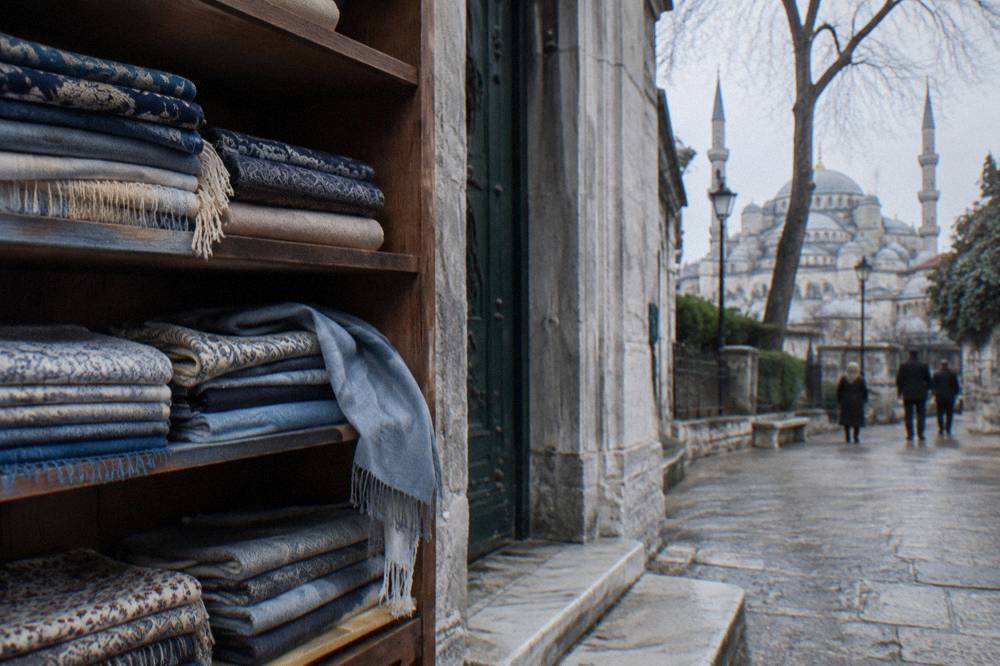
None of this requires special clothing. Ordinary travel wardrobe pieces work: trousers, a long skirt, a maxi dress, a loose shirt with sleeves. The headscarf can be any large square or rectangle of fabric; you bring your own or borrow one at the entrance, and thousands of visitors do the latter every day. If you want a dedicated piece of advice, a light pashmina that folds into a pocket solves the scarf problem and the chilly-interior problem at once.
Here is the practical checklist in one place:
| Item | Rule | If you don't have it |
|---|---|---|
| Shoulders | Covered, no straps or tank tops | Loaner wrap at the entrance |
| Knees | Covered; shorts and short skirts fail | Loaner skirt or wrap, usually free |
| Head (women) | Scarf covering the hair | Loaner scarves at most major mosques |
| Shoes | Removed at the carpet edge, carried in hand or bagged | Plastic bags often provided |
| Tightness | Loose-fitting preferred over body-hugging | Not checked as strictly as coverage |
The shoe rule deserves a note because people worry about it more than they should. You take your shoes off and carry them; some mosques provide plastic bags, and in the big tourist mosques there are shelves. Wear socks you are happy to be seen in, since you will spend your visit in them. Socks with holes are a rite of passage for travellers everywhere, but Istanbul's carpeted interiors give you a decent chance to fix that in advance.
There is a cultural layer worth knowing too, and it is the reason this site exists: the dress code is the one gate between you and some of the most spectacular free interiors in Europe. If the whole free-visiting approach appeals to you, the explanation of whether a free walking tour is actually free covers how the tip-based model works, and what to tip a free walking tour guide in Istanbul covers the economics without inventing a required amount.
Mosque-By-Mosque Rules: Hagia Sophia, Blue Mosque, Suleymaniye
The core dress code is the same everywhere, but the surrounding ticketing differs: the Blue Mosque and Suleymaniye are free throughout, while Hagia Sophia is free on the ground-floor worship level only, with a separate paid ticket for the upper gallery. Chora, the Kariye Mosque, follows the same pattern as Hagia Sophia, free to worship in, paid tourist route, and closed to tourists on Fridays. Attendants at each site enforce the code at the door.
Start with the Blue Mosque, formally the Sultan Ahmed Mosque, because it is the simplest case. Entry is free to worshippers and visitors alike, there is no museum ticket of any kind, and the dress code is the standard one described above. Modest dress is required, full stop. The mosque's restoration, described as the most extensive in its history, is largely complete, so the interior is visible again rather than shrouded, and the courtyards are fully open. It closes to visitors during the five daily prayers, with longer Friday pauses for the midday sermon. The site's own guide to whether the Blue Mosque is free goes deeper on timing. One of the free walking routes passes through here: 3-Hour Old City & Daily Life.
Suleymaniye, Sinan's masterpiece on the Old City's third hill, works the same way. Free entry, standard code, magnificent free interior. Its hilltop position also gives you one of the best no-cost panoramas in the city from the terrace behind the complex, which is covered in the guide to free Bosphorus views without a boat ticket. There is a dedicated page on whether Suleymaniye Mosque is free as well.
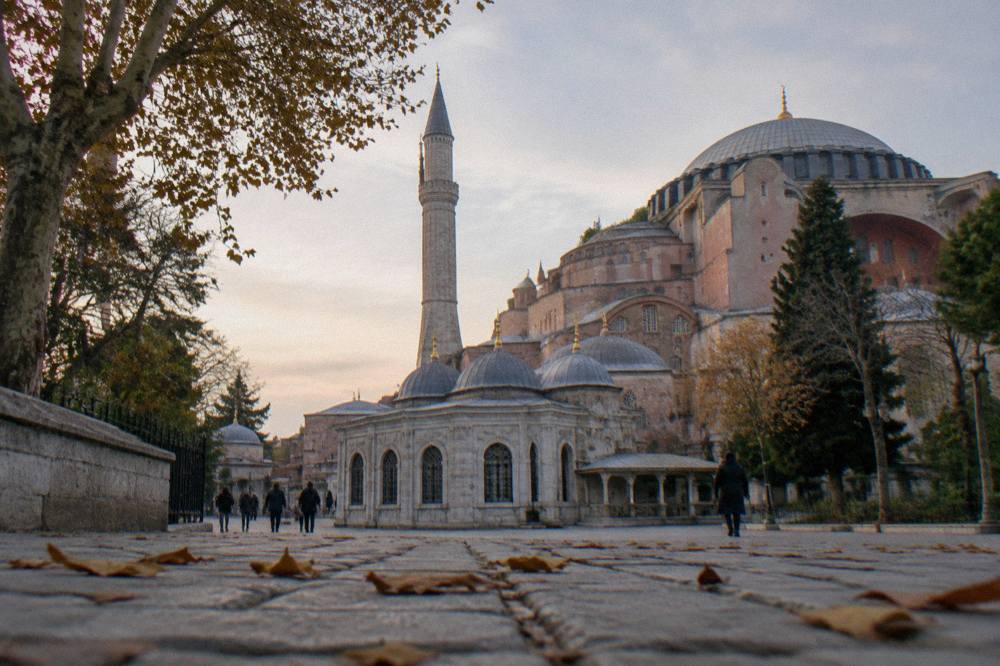
Hagia Sophia is where the confusion lives, and it is worth being blunt about the structure. The ground-floor worship space is free, and you enter it under the same dress code as any mosque. The upper gallery and its museum-style route carry a dedicated paid ticket for foreign visitors, and that ticket is separate from the free worship access; the two should never be collapsed into a single claim that "Hagia Sophia is free" or "Hagia Sophia is paid," because both are true of different parts of the building. Restoration work is ongoing and has advanced to the eastern semi-dome, with scaffolding inside and the main dome covered in canvas, but reporting on the restoration confirms it does not interrupt worship or visits.
Chora, now the Kariye Mosque, repeats the pattern with its own twist: a paid tourist route for foreign visitors, a free worship space, and a Friday closure to tourists. Its official listing sits on the Ministry of Museums' site at muze.gen.tr, which is the right place to check the current arrangement, since the exact price and which mosaic areas are open to tourists have shifted since the reconversion. Sources differ on the details, so treat secondary figures as approximate and confirm at the official page.
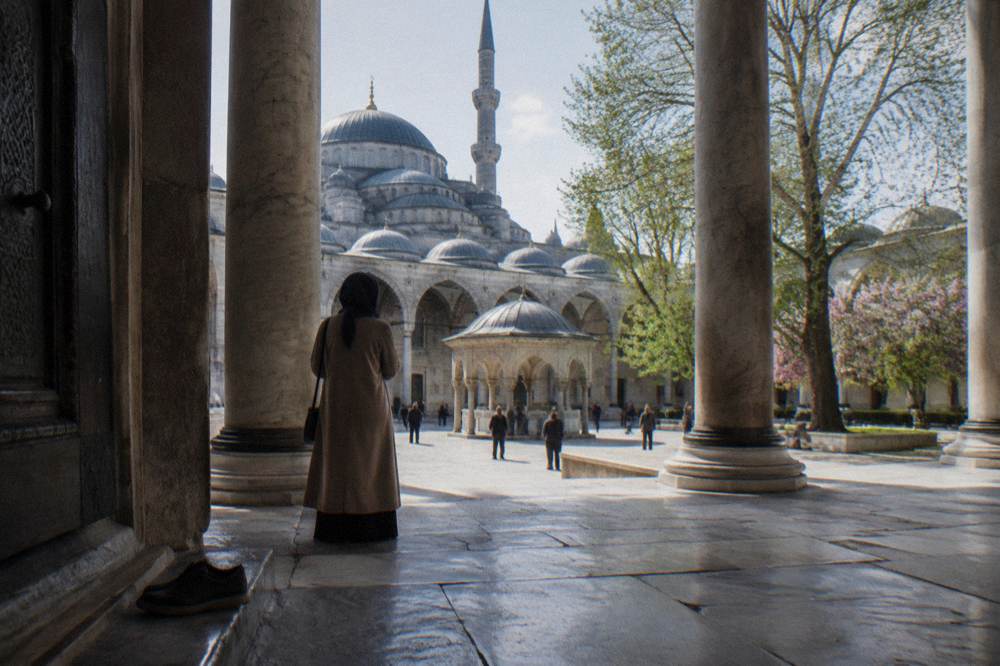
A note on who enforces what, because Istanbul's sites are run by separate rulebooks that must never be blended. The Diyanet runs worship functions; Vakiflar, the foundations directorate, looks after the fabric of the imperial mosques like the Blue Mosque, Suleymaniye and Rustem Pasha, which are free to enter as a worshipper or visitor; the Ministry of Culture and Tourism sells the paid gallery tickets at Hagia Sophia and Chora. One operator's rule never transfers to another's site, which is why this article does not say "mosques in Istanbul generally allow X." Each claim above belongs to the specific site it names. A free walk covers this ground: Essentials In 2 Hours.
What Happens If Your Outfit Doesn't Pass
Almost nothing dramatic: an attendant hands you a wrap, a skirt or a headscarf, you put it on, and you walk in. Being turned away outright is rare and usually reserved for refusals, not for outfit problems. The loaner items are free, though at the busiest mosques queues for them can add ten or fifteen minutes in peak season. Attendants are volunteers or mosque staff, not enforcers looking for a fine.
The wraps themselves are part of the scenery. At the Blue Mosque and Hagia Sophia you will see racks and shelves of fabric in every colour, handed out and returned in a constant cycle. They are clean enough for the purpose and, honestly, nobody looks worse in a loaner skirt than they do standing outside a great mosque in shorts arguing with a volunteer. Take the wrap, enjoy the interior, return it on the way out. The full index of guides sits on Free Things To Do In Istanbul. A free walk covers this ground: Classic Old Town Walk.
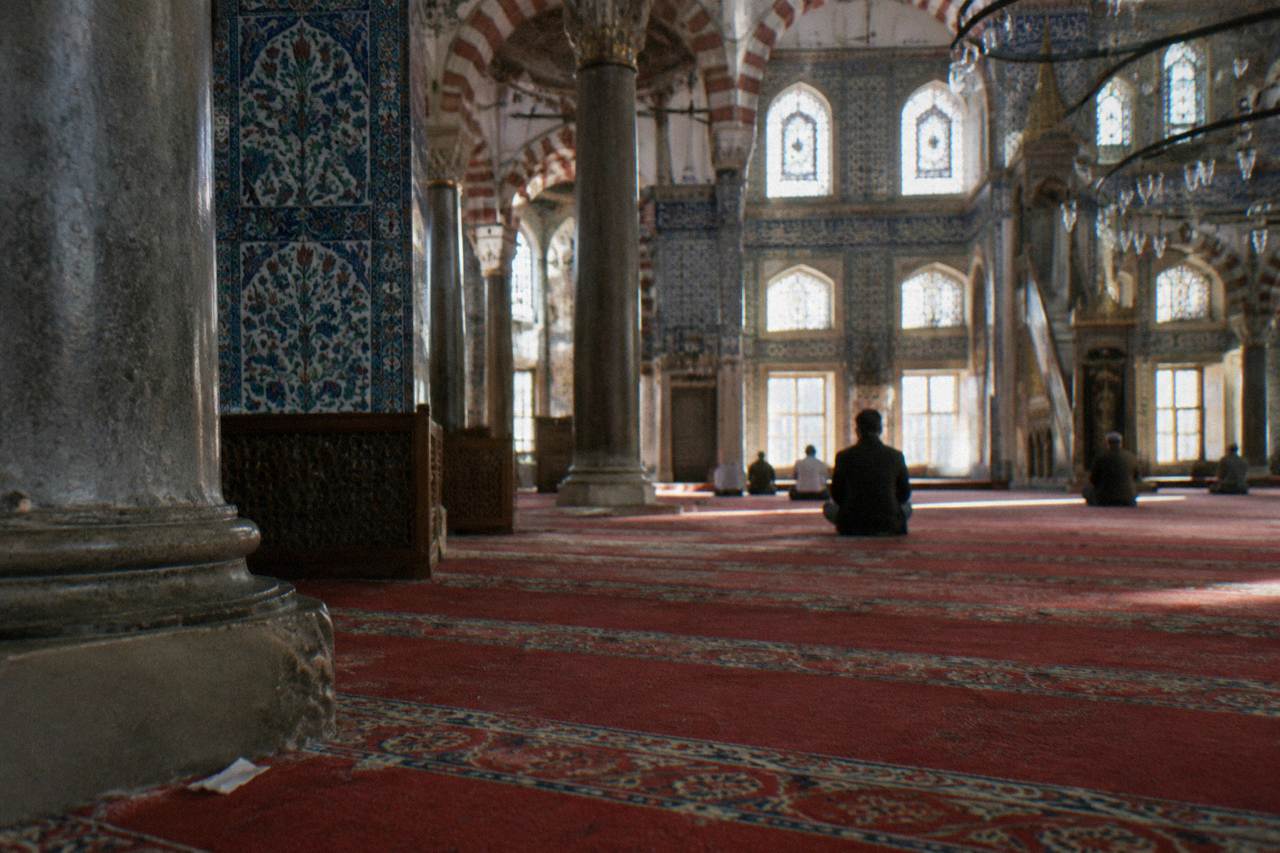
There are a few genuine failure modes to avoid. Wearing shoes onto the carpet is the one that draws real disapproval, because the carpet is where prayer happens. Walking in front of someone praying, or posing loudly in the worship area during prayer times, is the other. Neither has anything to do with clothing, and both are solved by the same instinct: look at what the worshippers are doing and give them space. Photography is generally welcome in visitor areas but not during prayer, and never with flash pointed at people at worship.
If you are joining a walk that includes mosque interiors, the guide handles the timing around prayers, which is one of the quiet advantages of the format. The Alternative Daily Life and Customs walk, rated 4.57 across 562 GuruWalk reviews, spends two and a half hours around Beyazit and the Grand Bazaar area and covers daily customs including mosque etiquette, and there is a fuller treatment of customs in the guide to the essential Sultanahmet highlights. For evening visits, the free night walking tour guide covers the illuminated Old City walks, though note the English-capable option there is the Illuminated Nighttime Journey, rated 4.87 across 238 reviews. One of the free walking routes passes through here: Mosque Inner Visit Included.
Free Alternatives When The Rules Feel Like Too Much
If you would rather not dress for mosque interiors at all, Istanbul still gives you plenty: the exteriors and courtyards of every imperial mosque, the free hilltop parks and viewpoints, and entire neighbourhoods like Fener, Balat and the Asian side that need no dress code whatsoever. Mosque courtyards are public space, so you can admire Sinan's domes and the tiled arcades without passing the carpet line at all.
This is a legitimate way to see the city, and locals do it constantly. The First Court of Topkapi Palace, for instance, is a public park you walk through without a ticket, a point the guide on whether Topkapi Palace is free covers alongside the contested ticketing of the palace itself. Camlica Hill on the Asian side is a free park with the best panorama in the city, distinct from the paid TV tower deck beside it, and Pierre Loti Hill above the Golden Horn is a free viewpoint, separate from the paid cable car that climbs to it. A free walk covers this ground: Best-Of Walk, English Or Spanish.
The Asian side deserves special mention for visitors overdosing on Old City formality. Kadikoy and Moda are loose, lively, café-heavy neighbourhoods where nobody cares what you wear, and the commuter ferry across is the cheapest sightseeing in Istanbul: a standard Istanbulkart transit fare rather than a cruise ticket. The Local Living and Street Tasting walk, rated 4.75 across 380 GuruWalk reviews and about two hours in Kadikoy, is built exactly around this mood, and the guide to free things on the Asian side maps the whole picture.
The Two Continents walk, rated 4.94 across 2,735 GuruWalk reviews, is the roster's biggest Asian-side option and pairs the ferry crossing with a guided wander, again free to reserve on GuruWalk with the guide paid by tips. Between them, these walks cover the dress-code-free half of Istanbul without you having to plan a thing.
Fener and Balat sit somewhere in between: they are historic Greek and Jewish quarters with churches and synagogues alongside mosques, so modest dress helps if you want to pop into any of them, but the streets themselves, the coloured houses and the Golden Horn waterfront, cost nothing and require nothing. The guide to free Fener and Balat walking tours covers the options, including the art-historian-led walk rated 4.78 across 1,305 reviews.
Seasonal Advice: Dressing For The Code In Autumn And Winter
Autumn and winter make the dress code easier, not harder: long trousers, boots and a coat already comply, and the only deliberate additions are a headscarf for women and socks worth showing. The real seasonal variable is timing, because prayer times shift later as daylight shortens, moving the visitor windows at active mosques and lengthening Friday closures around the midday sermon.
In July, visitors in sundresses face the biggest gap between street clothes and mosque clothes. In November, most of what you are wearing anyway passes the test. The pashmina advice from earlier earns its keep twice over in cold months, since mosque interiors are vast stone spaces that stay cool. Rain adds one wrinkle: wet shoes come off the same as dry ones, so a plastic bag in your daypack saves you carrying sodden boots through a carpeted hall.
The timing point matters more than people expect. A mosque closes to visitors for each of the five daily prayers, typically for somewhere between thirty and ninety minutes, longer on Fridays. In midwinter the afternoon prayers arrive earlier than you would guess and the evening ones later, so a plan that worked in June can leave you standing outside Suleymaniye at four in the afternoon wondering what happened. A prayer-time app, or the schedule board at the mosque entrance, solves it. Guides on the free walks track this constantly; the question of the best time of day for a free walking tour in Istanbul is largely a question about prayer times and light.
One last seasonal note that ties back to the dress code: winter visitors sometimes assume the loaner wraps are blankets. They are not; they are modesty garments, and treating them as coats at the door is the kind of small misunderstanding attendants handle with grace but would rather not. Bring your own warmth, borrow only what the code requires.
Common Questions About Mosque Dress In Istanbul
What To Wear Visiting Mosques In Istanbul For Free?
Covered shoulders and knees, a headscarf for women, and shoes off at the carpet. Bring a pashmina or use the free loaner wraps and scarves at the entrance. The visit itself costs nothing; the dress code is the only gate.
Do I need to bring my own headscarf?
No. Most major mosques, including the Blue Mosque and Hagia Sophia, lend headscarves and wraps free at the entrance. Bringing your own large scarf simply saves you the queue and lets you choose the fabric.
Can men wear shorts into Istanbul mosques?
Not if they are above the knee. Knee-length or longer shorts are the boundary, and attendants at busier sites will hand you a wrap rather than argue. Trousers remove the question entirely.
Is Hagia Sophia free if I follow the dress code?
The ground-floor worship space is free to enter with the standard dress code. The upper gallery route is a separate paid ticket for foreign visitors, so following the code gets you the free part, not the whole building.
Are the loaner skirts and scarves really free?
Yes. The wraps, skirts and scarves at mosque entrances are provided at no charge and returned on the way out. Nobody profits from them, and nobody is turned away for lacking the right clothing.
Do children have to follow the dress code?
In principle yes, in practice gently. Attendants rarely police small children hard, but school-age children are usually expected to meet the same coverage rules as adults.